



We gave our Travel Editors one job:
Find the best things to do and the most popular places in Salt Lake City.
Our city guides always review the best new attractions, great places to eat, and unique experiences.
Where to Book Bonneville Salt Flats:
Viator
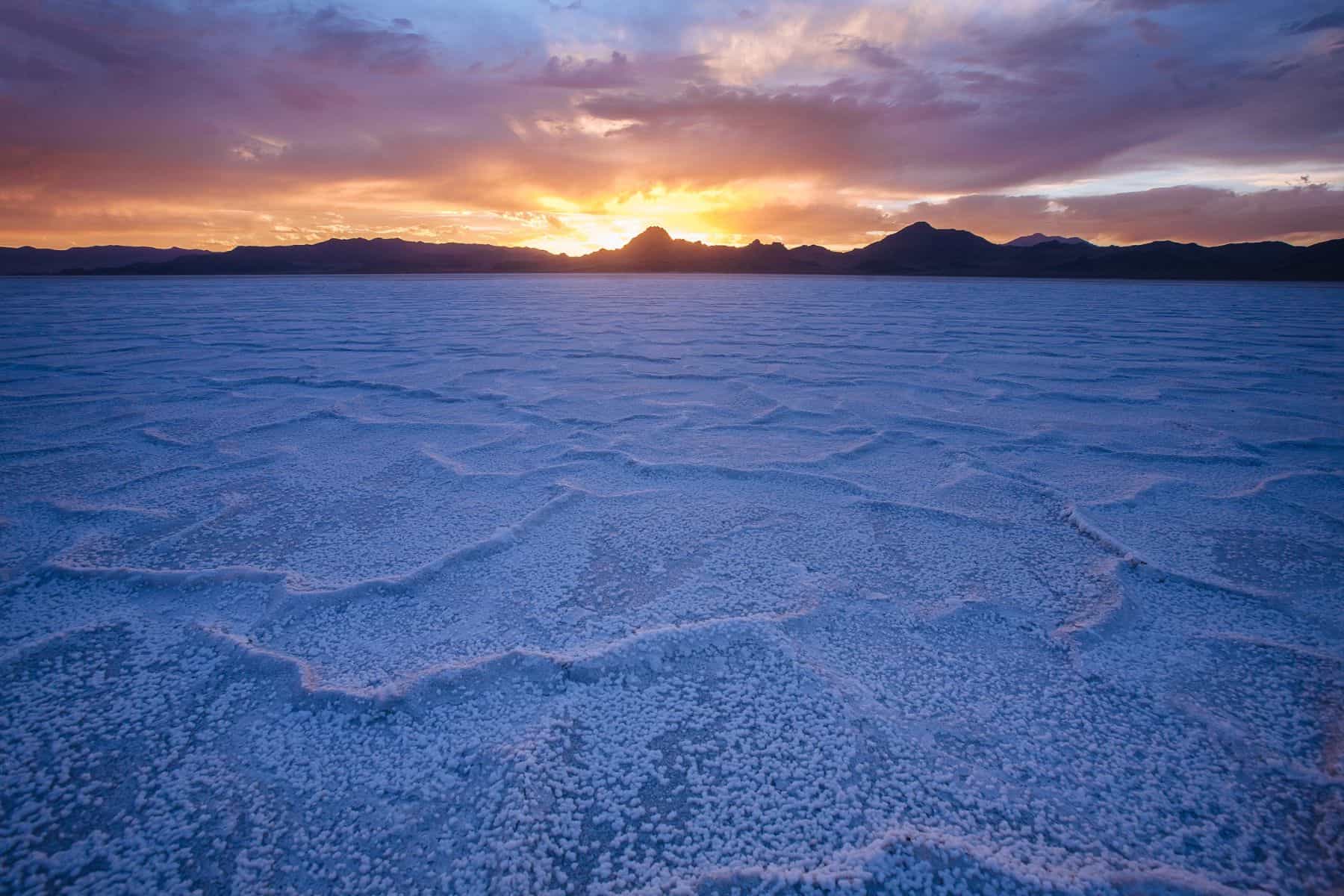
The Bonneville Salt Flats is one of the most unique landscapes in the United States, covering over 30,000 acres of 147 million tons of hard, white crystalized salt that seems to go on forever. The twelve-mile-long and five-mile-wide salt flats are what’s left when the ancient Lake Bonneville dried up.
It takes a 1.5-hour drive from Salt Lake City to reach one of only seven locations in the world where the natural curvature of the earth is visible to the naked eye.
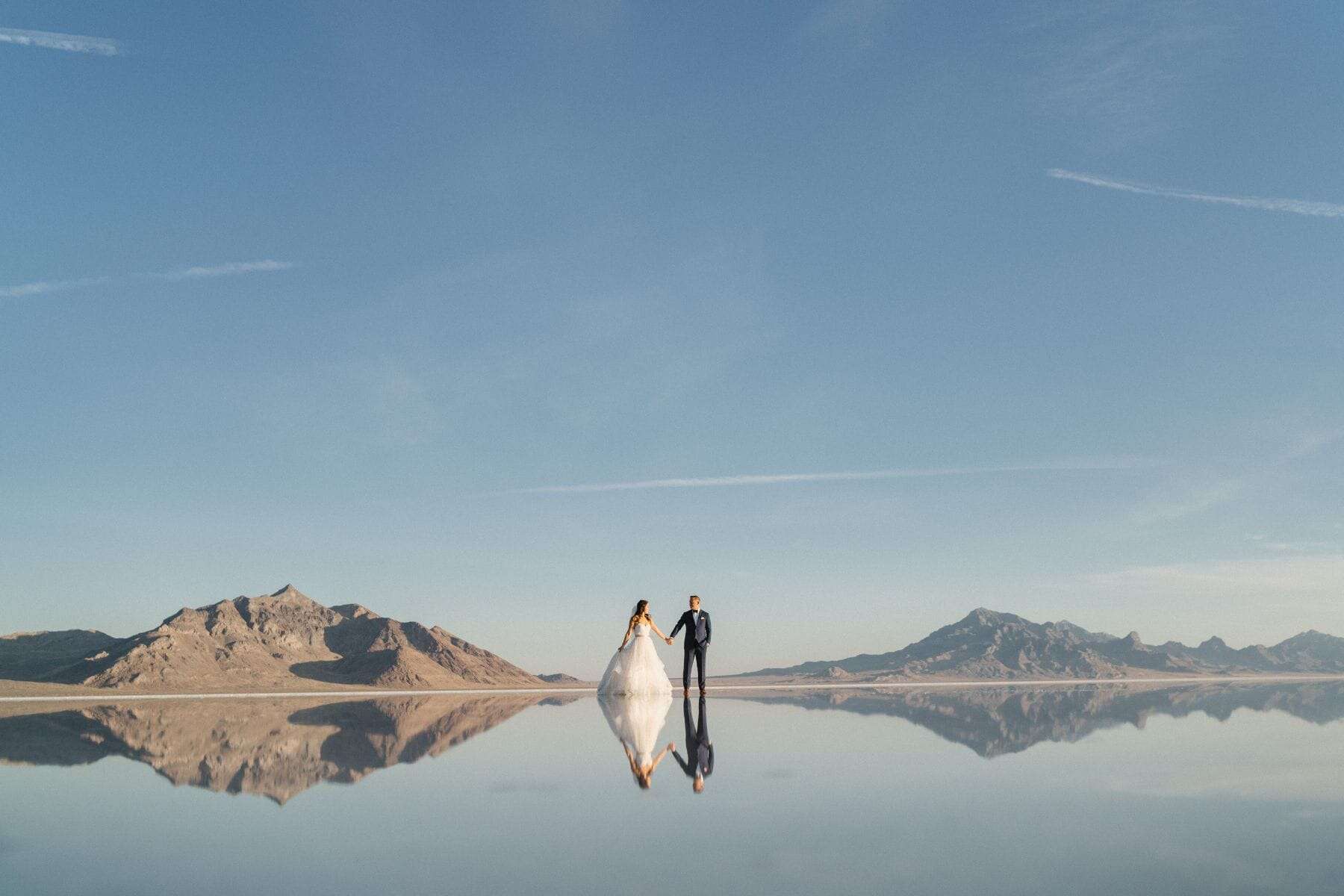
The Bonneville Salt Flats are open year-round, but summer is the best time to visit. The flats are generally dry, and you can walk on them. Starting in late fall and continuing throughout the spring, you can see a layer of water that collects over the salt flats and creates a surreal, reflective effect that photographers love to capture.
During August, you can experience Speed Week, a racing competition at the Bonneville International Speedway. The Bonneville Salt Flats are famously known for being the Fastest Speedway on Earth, where jet-propelled cars, and the world’s fastest wheel-driven cars and motorcycles race for new land speed records.
The Turbinator II holds the land speed record here at 503 MPH. There are also non-motorized events here at the flats, like endurance running races and amateur rocket launches.
One of the best spots to view the Salt Flats is along I-80, about 10 miles east of Wendover. Prepare for all weather conditions, heat, wind, water, and cold – depending on the time of year. You can drive on the salt flats, entering at the entrance by the Bonneville Speedway Road.
Things we like:
-
 The Salt Flats Rest area has restrooms and an outdoor water spout to help wash the salt off.
Things we don't like:
-
 There is no refuge from strong wind gusts, and road signs warn of extreme wind gusts
 -
The salt crust is thinning with less than one inch toward the edges
Where to Book Bonneville Salt Flats:
Viator
Related Reviews




Things we like:
-
The Salt Flats Rest area has restrooms and an outdoor water spout to help wash the salt off.
Things we don't like:
-
There is no refuge from strong wind gusts, and road signs warn of extreme wind gusts
-
The salt crust is thinning with less than one inch toward the edges


 Back
Back














Comments